Prosecutorial Misconduct in Michigan Criminal Appeals


Many people assume that prosecutors are simply trying to secure convictions. And while obtaining convictions is part of their job, that is not their entire legal duty. A Michigan prosecutor represents the people of the state of Michigan. And they're expected to pursue justice, not merely win cases. This distinction matters a lot.
Every person charged with a crime has constitutional rights. These include the right to due process under the 14th Amendment of the United States Constitution and Article 1, Section 17 of the Michigan Constitution. The law expects prosecutors to respect those rights throughout a criminal case.
And when prosecutors fail to do so by making improper arguments, withholding evidence, introducing inadmissible testimony, or engaging in other unfair tactics, they may commit prosecutorial misconduct. Not all instances of prosecutorial misconduct result in a new trial.
When Does Prosecutorial Misconduct Become Grounds for Appeal?
Some errors are minor, while others can fundamentally undermine the fairness of the proceedings. Michigan appellate courts carefully examine whether the prosecutor's actions likely influenced the jury's verdict or deprived the defendant of a fair trial. This analysis can include whether an improper act constitutes harmless error or an error serious enough to warrant appellate relief.
Mark Linton is a highly skilled and respected Michigan criminal appeals lawyer. His appellate practice includes identifying prosecutorial misconduct that may make a conviction vulnerable on appeal. And here, he explains what qualifies as prosecutorial misconduct. He also discusses other crucial things you need to know about prosecutorial misconduct.
What is Prosecutorial Misconduct in Michigan?
Prosecutorial misconduct refers to conduct by a prosecutor that violates a defendant's right to a fair trial. The misconduct may occur before a trial, during the presentation of evidence, during witness examinations, or during closing arguments.
Michigan courts have repeatedly explained that prosecutors have considerable freedom to argue their cases. But that freedom has limits. In the People v. Bahoda (1995) case, the Michigan Supreme Court explains it clearly. Prosecutors may argue the evidence and the reasonable inferences arising from it.
However, they may not use improper methods that deny a defendant a fair and impartial trial. Likewise, in the People v. Dobek (2007) case, the Michigan Court of Appeals placed more emphasis. Allegations of prosecutorial misconduct are evaluated on a case-by-case basis. And the evaluations consider the prosecutor's remarks in context rather than in isolation.
The prosecutor's ethical responsibilities are also reflected in the Michigan Rules of Professional Conduct. Rule 3.8 of the Conduct imposes special obligations on prosecutors. This includes the duty to disclose evidence that may prove a defendant is not guilty. And to ensure that criminal prosecutions are conducted fairly.
In addition, Michigan Court Rule (MCR) 6.201, also known as the Michigan discovery rule, governs the prosecutor's disclosure obligations. Under this rule, prosecutors must disclose certain information and evidence to the defense. This includes witness information, police reports, expert reports, and exculpatory evidence. This is a requirement by the United States Supreme Court's decision in the Brady v. Maryland (1963) case.
When prosecutors ignore these obligations, the consequences can extend far beyond the trial itself. In some cases, prosecutorial misconduct becomes a central issue on appeal.
Common Examples of Prosecutorial Misconduct
Prosecutorial misconduct can take many different forms. Some violations occur inside the courtroom, while others happen long before the jury is ever selected. Here are several types of prosecutorial misconduct:
Withholding Exculpatory Evidence
One of the most serious forms of prosecutorial misconduct is failing to disclose evidence that could help the defense. The Brady v. Maryland case directs that prosecutors have a constitutional duty to disclose evidence favorable to the accused. This is especially true when that evidence is material to guilt or punishment.
This obligation exists even if the defense does not specifically request the evidence. Examples of evidence that should be shared include evidence pointing to another suspect and witness statements that contradict the prosecution's theory.
They also include information that undermines the credibility of a key prosecution witness and scientific evidence that supports the defendant’s innocence. A prosecutor's failure to disclose this type of evidence may violate the defendant's due process. And it can become a significant issue in Michigan criminal appeals.
Making Improper Statements During Closing Arguments
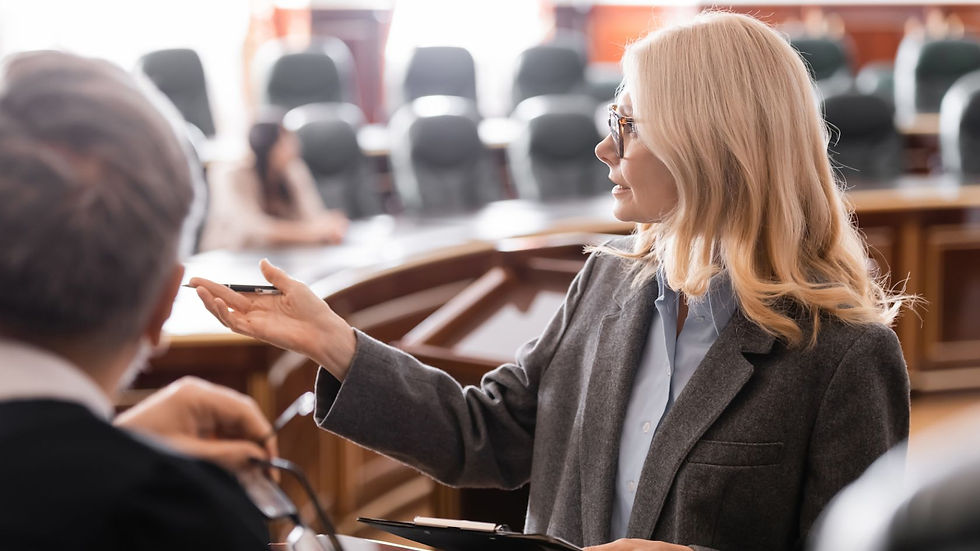
Closing arguments allow prosecutors to explain why they believe the evidence proves guilt beyond a reasonable doubt. However, they cannot inflame the jury's emotions. Neither can they encourage a verdict based on sympathy, fear, or prejudice instead of the evidence.
For example, prosecutors generally should not express their personal beliefs that the defendant is guilty. They should also not suggest they possess evidence that was never presented at trial. Plus, they should not ask jurors to decide the case based on emotion rather than the facts.
They're also not allowed to misstate the law or the evidence. And the same case applies to shifting the burden of proof to you, the defendant. Michigan courts have repeatedly recognized that improper closing arguments can unfairly influence jurors, especially in closely contested cases.
Vouching for a Witness’s Credibility
When vouching for a witness's credibility, a prosecutor can wrongly assure the jury that a witness is truthful. A prosecutor is allowed to argue that the evidence supports a witness's credibility. However, they may not imply they have special knowledge outside the trial record confirming a witness is truthful.
The Michigan Supreme Court explained this in the People v. Bahoda case. Improper vouching risks lending the government's prestige to a witness's testimony. And this can unfairly influence the jury's evaluation of credibility.
Appealing to Passion or Sympathy
As mentioned earlier, jurors must decide criminal cases based on the evidence and the law, not emotion. And a prosecutor crosses the line when they ask jurors to convict because they feel sympathy for the victim, fear crime in the community, or want to “send a message."
Michigan appellate courts continuously caution prosecutors against arguments that encourage jurors to decide cases on emotion rather than facts.
Shifting the Burden of Proof
In every Michigan criminal case, the prosecution bears the burden of proving every element of the charged offense beyond a reasonable doubt. This principle is reflected throughout Michigan criminal procedure. And it's fundamental to the presumption of innocence.
A prosecutor may not suggest that the defendant must prove innocence, explain why they did not testify, or present evidence to avoid conviction. And remarks implying that the defendant bears any obligation to prove a fact can improperly place the burden of proof on the defense. And this can, in turn, jeopardize the fairness of the trial.
Asking Improper Questions
A prosecutor may also commit misconduct during witness examinations. They may ask questions solely designed to inflame the jury. Or, they may repeatedly introduce inadmissible evidence after objections have been sustained. They may also attempt to place facts before the jury through questions, not admissible testimony. Or, they may knowingly present false testimony.
Michigan Rules of Evidence (MRE) 611 gives trial judges authority to control witness examinations. This ensures they remain fair and focused on admissible evidence. Likewise, MRE 403 allows courts to exclude otherwise relevant evidence if its unfair prejudice substantially outweighs its probative value.
Misrepresenting the Evidence
Jurors rely heavily on attorneys to accurately summarize the evidence presented during trial. And when prosecutors exaggerate testimony, misquote witnesses, or argue facts that were never introduced into evidence, they risk misleading the jury.
Michigan appellate courts take a keen interest in reasonable inferences from the evidence, which is generally permissible. And they distinguish it from arguments that create facts which are unsupported by the trial record. That distinction often becomes critical during appellate review.
Knowingly Presenting False Information
A prosecutor has a duty to seek the truth, not simply obtain a conviction. And if a prosecutor allows a witness to provide false testimony, the defendant's constitutional right to due process may be violated.
The same case is true when the prosecutor fails to correct testimony they know is inaccurate. Michigan courts treat these allegations seriously. This is because a criminal conviction should never rest on evidence the government knows to be false.
Violating Discovery Obligations
MCR 6.201(B) requires prosecutors to disclose certain evidence to the defense before trial. And discovery violations may include failing to disclose police reports, witness statements, expert reports, photographs or videos, or scientific testing results. Essentially, any evidence that may help prove the defendant's case.
Important evidence should also not be disclosed too late. This is because the defendant may lose the opportunity to investigate the information or prepare an effective response.
Can Prosecutorial Misconduct Result in a New Trial?
Yes, but not every mistake by a prosecutor will always lead to that result. Michigan courts recognize that trials involve human participants, and humans sometimes make mistakes. The question is whether the prosecutor's conduct deprived the defendant of a fair trial or likely affected the jury's verdict.
For example, a prosecutor may accidentally misspeak during closing arguments. And they may not have committed reversible misconduct if the trial judge immediately corrected the error. Or, if they instructed the jury to rely only on the evidence presented at trial.
On the other hand, repeated misconduct or particularly serious violations may undermine confidence in the case's outcome. This is especially true when the prosecutor withholds important evidence, knowingly presents false evidence, or repeatedly ignores the trial court's rulings.
In the People v. Abraham (2003) case, the Michigan Court of Appeals gave a clear explanation. Allegations of prosecutorial misconduct are evaluated individually, case by case. This is by examining the prosecutor's conduct in context and determining whether the defendant received a fair trial.
The Court emphasized that isolated improper remarks do not automatically require a new trial. Instead, appellate courts consider the entire record. And this includes the strength of the evidence, the nature of the misconduct, and whether the error could have influenced the jury's decision.
How Michigan Courts Determine Whether Prosecutorial Misconduct Warrants Relief
When reviewing a claim of prosecutorial misconduct, Michigan courts generally consider factors such as:
- The seriousness of the prosecutor's conduct
- Whether the misconduct was isolated or repeated
- Whether the defense was objected during trial
- Whether a curative instruction was given by the trial court
- The strength of the evidence against the defendant
- Whether the misconduct likely influenced the jury's decision
For example, a single improper statement may not require a new trial. This is if the evidence of guilt was overwhelming and the trial court immediately instructed jurors to disregard the comment. However, continuous misconduct that affects critical evidence or undermines the fairness of the proceedings may justify appellate relief.
What Should You Do If You Believe Prosecutorial Misconduct Occurred?
If you believe a prosecutor acted improperly during your criminal case, it is important to speak with an experienced Michigan appeals lawyer like Mark Linton as soon as possible. Many claims of prosecutorial misconduct require a careful review of the trial transcripts, motions filed before trial, discovery materials, and witness testimony.
They also require evaluating jury instructions and the trial court's rulings. An appellate attorney in Michigan can identify whether the prosecutor's actions violated Michigan law, constitutional protections, or court rules. And they can determine if those errors provide a basis for seeking relief on appeal or through post-conviction proceedings.
Frequently Asked Questions About Prosecutorial Misconduct in Michigan
Can prosecutorial misconduct be raised for the first time on appeal?
Yes, but it depends on whether the issue was preserved during trial. If defense counsel objected to the prosecutor's conduct, the appellate court generally reviews the claim under the ordinary standard of review. But if no objection was made, the court typically reviews the claim under Michigan's plain error rule, which considers whether an unpreserved error affected substantial rights. Even when an issue was not preserved, relief may still be available in appropriate cases.
Does a prosecutor have to act intentionally for misconduct to occur?
Not always. Some forms of prosecutorial misconduct involve intentional actions. Others result from unintentional or improper conduct that violates a defendant's rights. The focus in an appeal is often less on the prosecutor's intent and more on whether the conduct deprived the defendant of a fair trial or affected the outcome of the case.
Can prosecutorial misconduct occur during plea negotiations?
Yes. Although many misconduct claims arise during trial, many issues can also develop before a trial begins. For example, problems involving disclosure obligations, false representations, or other improper conduct during plea negotiations may become relevant in later appellate or post-conviction proceedings. But this depends on the circumstances.
What happens if the appellate court finds prosecutorial misconduct?
The remedy depends on the nature and impact of the misconduct. An appellate court may affirm if the error was harmless. They may also reverse the conviction and order a new trial, or remand the case for additional proceedings. Alternatively, they may provide another form of relief authorized by Michigan law.
Can multiple small instances of misconduct add up to a reversible error?
Yes. A single improper remark may not justify overturning a conviction. But appellate courts may consider the cumulative effect of several errors. When multiple instances of misconduct combine to undermine the fairness of the proceedings, they may warrant relief even if each incident alone would not.
Is prosecutorial misconduct the same as ineffective assistance of defense counsel?
No. These are separate legal issues. Prosecutorial misconduct focuses on improper actions by the prosecutor. Ineffective assistance of counsel, on the other hand, concerns whether the defendant's own advocate provided constitutionally adequate representation. In some criminal appeals, both issues are raised because each may have contributed to an unfair trial.
Is there a deadline for raising prosecutorial misconduct after a conviction?
The applicable deadline depends on the case's procedural posture. If the claim is raised on direct appeal, it generally must comply with Michigan's appellate filing deadlines. And if it is raised later through post-conviction proceedings, different procedural rules and requirements may apply. These deadlines can significantly affect a person's rights. Therefore, it is important to seek legal advice as soon as possible.
Can prosecutorial misconduct lead to professional discipline against the prosecutor?
In some situations, yes. A finding of prosecutorial misconduct in a criminal appeal does not automatically result in disciplinary action. However, prosecutors are subject to the Michigan Rules of Professional Conduct. And serious ethical violations may be investigated through the attorney discipline process. And this can lead to grievances with the Attorney Grievance Commission, which happens separately from the criminal appeals.
One Unfair Trial Can Change Everything. So Can One Strong Appeal
Years in prison. A lost career. A damaged reputation. A future put on hold. That's what’s at stake when prosecutorial misconduct goes unchallenged. Mark Linton knows that appellate victories are won by more than just pointing out mistakes. He understands they are won by proving why those mistakes mattered.
If a prosecutor’s misconduct denied you a fair trial, let Mark Linton fight to expose it. And let him pursue the justice you should have received from the very beginning. Contact Mark Linton today because a conviction is only as strong as the fairness behind it.


Comments