Illegal Surveillance Evidence in Michigan: Can It Be Used Against You?


Can Illegal Surveillance Evidence Be Used in a Michigan Criminal Case?
Sometimes it can. Sometimes it cannot. The phrase “illegal surveillance" covers several different situations. Police might secretly record a conversation, obtain someone's phone location, or search digital communication. They may also install a tracking device, intercept electronic communications, or obtain information through a federal intelligence program.
The legal consequences are different for each. The starting point is the Fourth Amendment to the U.S. Constitution, which protects against unreasonable searches and seizures. Michigan's Constitution provides a similar protection under Const 1963, Article 1, Section 11. Michigan courts recognize that, subject to established exceptions, warrantless searches are generally unreasonable. This is in accordance with the People v. Cartwright (1997) case.
But proving that surveillance violated a law does not automatically answer the separate question of whether the evidence must be excluded. Michigan's Supreme Court has explained that the exclusionary rule is primarily designed to deter unconstitutional police conduct. When the alleged violation is only statutory, exclusion is not always the remedy. This follows the People v. Hawkins (2003) case. That distinction can be critical in an appeal.
Illegal surveillance evidence can come from many sources, including recordings, digital communications, location data, tracking devices, and other forms of electronic monitoring. For example, ALPR surveillance in Michigan raises its own questions about privacy and government tracking.
What Makes Surveillance Illegal?
Surveillance may be unlawful for several different reasons. For example, law enforcement may:
- Conduct a search without a warrant when the Fourth Amendment requires one
- Obtain a warrant without sufficient probable cause
- Exceed the scope of the warrant
- Continue surveillance after the legal authority for it expires
- Intercept communications in violation of federal or Michigan law
- Search previously collected digital information without the required legal authorization
- Obtain evidence through an unlawful search and then use that evidence to obtain additional evidence
The precise violation plays a key role. A defendant generally cannot obtain suppression simply by showing that investigators made a procedural mistake. The court must determine whether the conduct violated a constitutional or statutory protection. And if so, what remedy does the law provide?
Michigan's Eavesdropping Law
Michigan has specific statutes governing the interception of private conversations. Michigan Compiled Law (MCL) 750.539c states that a person generally may not willfully use a device to eavesdrop. This applies to a private conversation without the consent of all parties. MCL 750.539a defines “eavesdrop" to include overhearing, recording, amplifying, or transmitting private discourse without the required consent.
However, Michigan courts have established a critical "participant exception" to this rule. In cases like Sullivan v. Gray (1982), courts have interpreted the statute to mean that eavesdropping only applies to outside, third-party interceptors.
Consequently, Michigan operates as a "one-party consent" state for active participants. A person in the conversation can legally record without the other parties’ knowledge or consent. But a third-party outsider cannot legally bug the room or record the call. The Michigan Supreme Court addressed the meaning of a private conversation in the People v. Stone (2001) case.
The Stone case involved recordings of conversations conducted over a cordless telephone. The defendant argued that because technology made interception possible, the conversation could not reasonably be considered private. The Michigan Supreme Court rejected that argument.
The Court held that a conversation can remain private even when technology makes interception possible. The Court explained that a conversation is private if a person reasonably expects no intrusion or surveillance. That principle remains important when evaluating alleged illegal recordings in Michigan.
However, there's an important distinction between Michigan's statutory protections and constitutional protections. A violation of an eavesdropping statute does not automatically mean that the Fourth Amendment was violated. That distinction can affect whether the evidence is excluded.
Does the Michigan Exclusionary Rule Automatically Apply?
No. This is one of the most important points when challenging surveillance evidence. In the People v. Hawkins (2003) case, the Michigan Supreme Court explained that the exclusionary rule mainly deters unconstitutional police conduct. A violation of a statute does not automatically require suppression. The only exception is when the Legislature intended exclusion to be the remedy, or the statutory violation also amounts to a constitutional violation.
This means you, the defendant, may face two separate questions. First, was the surveillance unlawful? Second, if it was unlawful, does the law require the resulting evidence to be excluded? Those questions are not always answered the same way.
For example, Michigan courts have recognized that a statutory violation, standing alone, may not trigger exclusion. The remedy depends on the statute and the nature of the violation. That is why an appellate argument must name the exact legal protection that was violated. It should not simply label the surveillance “illegal."
What if the Surveillance Violated the Fourth Amendment?
The analysis changes when government surveillance violates the Fourth Amendment. As mentioned earlier, the Fourth Amendment protects people against unreasonable searches and seizures. When police obtain evidence through an unconstitutional search, the exclusionary rule can prevent the prosecution from using that evidence.
Michigan courts recognize the exclusionary rule as a remedy for constitutional search-and-seizure violations, as per the People v. Cartwright (1997) case. But even then, suppression is not automatic in every case. Several exceptions can limit the exclusionary rule, including:
- Good faith reliance on a warrant
- Independent source
- Inevitable discovery
- Attenuation
- Other recognized exceptions to the exclusionary rule
Michigan has adopted the federal good-faith exception. In the People v. Goldston (2004) case, the Michigan Supreme Court relied on federal precedent. The Court held that evidence from a defective warrant may still be admissible. This applies when officers reasonably relied on the warrant in objective good faith.
Therefore, even if a warrant is later determined to have been defective, the defense may still have to address whether officers reasonably relied on it.
What About Cell Phones and Digital Surveillance?
Modern surveillance often involves information that did not exist when many search-and-seizure rules were first developed. The U.S. Supreme Court has recognized that digital information can implicate substantial privacy interests. In the Riley v. California (2014) case, the Supreme Court said police usually need a warrant. This applies before they can search a cell phone's digital contents taken from an arrested person.
The Court recognized that modern phones contain an enormous amount of personal information. And they are fundamentally different from physical objects that might be found during a traditional search incident to arrest.
The Supreme Court later addressed historical cell-site location information in the Carpenter v. United States (2018) case. Carpenter arose from a Sixth Circuit case. And it involved government acquisition of historical cell-site records showing the defendant's movements over an extended period.
The Supreme Court held that obtaining the historical cell-site location information at issue constituted a Fourth Amendment search. And it generally required a warrant supported by probable cause. Carpenter is especially relevant to modern surveillance. It demonstrates that information held by a third party is not automatically outside Fourth Amendment protection simply because a person shared information with a service provider.
Can the Government Use Information Obtained Through Federal Surveillance?
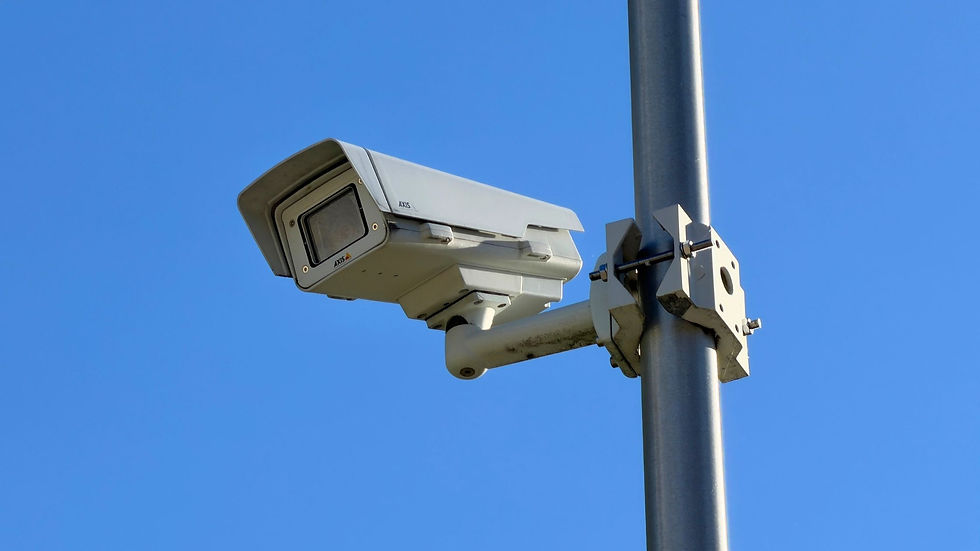
Federal surveillance creates another layer of analysis. The Foreign Intelligence Surveillance Act (FISA) establishes a federal framework for certain foreign-intelligence surveillance. FISA contains different authorities with different requirements.
One of the most significant is Section 702. It historically authorized targeted surveillance of non-U.S. persons reasonably believed to be located outside the United States for foreign-intelligence purposes. Section 702 did not authorize the government to intentionally target U.S. persons under that authority. However, communications involving Americans could be incidentally acquired when Americans communicated with foreign targets.
Section 702 also allowed government agencies to query information already collected under the program. And this was subject to statutory and procedural restrictions. The current statute contains specific requirements governing U.S.-person queries. And this includes FBI approval and documentation requirements in many circumstances.
There is an important current-status issue, however. As of September 2026, Section 702’s statutory authority expired on June 12, 2026. Federal transition provisions preserved certain previously issued orders, authorizations, and directives for their remaining periods. This means the expiration did not necessarily terminate every surveillance activity immediately.
That status is important when analyzing surveillance that occurred at a particular time. The governing law may depend on when the collection occurred and what authorization was in effect.
What is a FISA “Backdoor Search"?
A commonly used term is "backdoor search.” The basic concept is that communications collected through foreign-intelligence surveillance may contain information concerning Americans.
Government agencies can then search the collected database using an identifier associated with a U.S. person.
Those searches have generated significant legal scrutiny. Congress imposed additional restrictions on the F.B.I. US-queries through the Reforming Intelligence and Securing American Act of 2024 (RISAA). And this includes requirements for approval, training, documentation, and auditing.
The current statutory text also restricts FBI queries conducted solely to find and extract evidence of criminal activity. This is subject to specified exceptions. The Department of Justice (DOJ) has separately reported compliance problems involving Section 702. And it described remedial measures adopted by the FBI.
A 2026 DOJ Inspector General review found both compliant and noncompliant queries in its review of post-RISAA practices. For a criminal defendant, however, the existence of a compliance problem does not automatically mean that every piece of resulting evidence must be suppressed. The defense must establish the applicable legal violation and determine whether suppression is an available remedy.
Can FISA Evidence be Suppressed in a Criminal Case?
Potentially, but the answer is highly dependent on the circumstances. Federal courts have addressed challenges involving Section 702 surveillance and evidence later used in criminal prosecutions. In the United States v. Hasbajrami (2d Cir. 2019) case, the defendant challenged evidence derived from Section 702 surveillance. This was after the government disclosed the surveillance following his initial guilty plea.
The Second Circuit examined the collection of communications involving the defendant, the government's subsequent use of that information, and constitutional and statutory issues surrounding the surveillance. The case illustrates that surveillance litigation can involve more than the initial interception.
A court may have to examine:
- How the government initially obtained the information
- Whether the defendant was the surveillance target
- Whether the collection was incidental
- How government agencies later searched the information
- Whether the government obtained additional warrants based on the surveillance
- Whether the prosecution received or used the information
- Whether the defendant received the required notice
- Whether suppression is an available remedy
Those questions can become highly technical.
What If Surveillance Leads Police to Other Evidence?
Illegal surveillance can sometimes produce what courts call “fruit of the poisonous tree.” The basic idea is that evidence discovered because of an unconstitutional search may also be subject to suppression.
For example, suppose investigators unlawfully intercept communications identifying a particular location. They then use that information to obtain a search warrant and discover physical evidence inside the location. The defense may argue that the later evidence is derivative of the original constitutional violation.
But the prosecution may respond that the evidence came from an independent source, would have been inevitably discovered, or was sufficiently attenuated from the original illegality. The outcome depends heavily on the facts and the record. This is why the surveillance question cannot be separated from the chain of events that followed it.
What Happens If The Trial Judge Denies a Motion to Suppress?
This is where surveillance issues become especially important to a Michigan criminal appeal. Suppression issues are generally decided in the trial court first. The defense must develop a record concerning what happened, what the government obtained, what authorization existed, and why the search or surveillance was unlawful.
If the court denies suppression and the defendant is later convicted, the defendant may raise the issue on appeal. This is subject to the applicable appellate rules and preservation requirements. Michigan appellate courts do not conduct a new trial. They review the record created in the trial court. An appeal depends on identifying the legal error, preserving it, applying the correct standard of review, and showing why the error warrants relief.
That matters enormously in surveillance cases. A defendant who simply argues, “The police illegally surveilled me,” has not necessarily presented an appellate issue. The brief must identify the specific ruling being challenged and explain why the trial court's legal analysis was incorrect.
What Standard of Review Applies to Surveillance Issues?
The standard of review depends on the precise issue. Questions of constitutional law and legal interpretation are generally reviewed de novo. This means the appellate court considers the legal question independently. Historical facts may receive more deference because the trial judge had the opportunity to hear the testimony and evaluate the evidence.
Michigan appellate practice can therefore involve multiple layers of review within the same suppression issue. For example, an appellate court may independently determine what the Fourth Amendment requires while giving deference to factual findings made by the trial court.
Understanding that distinction can make all the difference. Michigan appellate courts also apply harmless-error principles. Under MCL 769.26, an error does not necessarily require reversal unless it affected the defendant's substantial rights. Harmless-error analysis is a critical stage of appellate review. Learn more about the harmless error rule in Michigan criminal appeals.
So even after establishing that the trial court made a legal mistake, an appellant may still have to explain why that mistake was significant enough to justify appellate relief.
What If the Surveillance Issue Was Never Raised at Trial?
That can make an appeal substantially more difficult. Michigan generally distinguishes between preserved and unpreserved errors. When a defendant fails to object to raise an issue in the trial court, appellate review may be limited. Michigan's plain error framework is associated with the People v. Carines (1999) case.
Preservation and plain-error review are important parts of appellate strategy. This does not mean an unpreserved surveillance issue is automatically lost. It means the appellate argument may face a different and more demanding route to relief. That is why surveillance cases should be examined early, preferably before trial, whenever possible.
Can Surveillance Evidence be Challenged After a Conviction?
In some circumstances, yes. If the issue was preserved, it may be raised on direct appeal. There are also instances when a defendant may need to consider post-conviction proceedings. These include when important information concerning surveillance was not available during the original proceedings.
Another instance is when the claim depends on matters outside the existing appellate record. Michigan Court Rule (MCR) 6.500 series governs motions for relief from judgment. Depending on the circumstances, post-conviction proceedings may provide a route for claims involving newly discovered evidence, constitutional violations, or ineffective assistance of counsel.
For example, suppose defense counsel failed to investigate evidence showing that government surveillance was unlawful. Or, the counsel failed to challenge a questionable warrant or failed to move to suppress critical evidence. That could potentially raise an ineffective-assistance claim.
The Strickland v. Washington (1984) case held that a defendant generally must establish deficient performance and resulting prejudice. And Michigan applied this standard in the People v. Pickens (1994) case.
Frequently Asked Questions About Illegal Surveillance Evidence in Michigan
How do I know if the police were legally allowed to surveil me?
You generally need to examine what type of surveillance occurred and whether police had a warrant or other legal authority. You also need to evaluate what the authorization permitted and whether investigators exceeded its scope. The answer can depend heavily on the specific facts and records in your case.
Can I find out whether the government was secretly monitoring me?
Sometimes. Surveillance information may appear in discovery, search warrant materials, investigative records, or notices provided by the prosecution. Certain federal intelligence records may remain classified or subject to disclosure restrictions, however, making the issue more complicated.
Can police use evidence from a surveillance operation to get a search warrant?
They may be able to do so if the information was lawfully obtained and provides a sufficient basis for the warrant. If the original surveillance was unconstitutional, the defense may be able to challenge the later warrant under derivative evidence rules.
What happens if police accidentally record a conversation they were not authorized to hear?
Accidental interception does not automatically determine whether the recording is admissible. Michigan's eavesdropping statute focuses heavily on intentionality. This means that inadvertent overhearing may not violate state statutory law. However, if police intercepts unauthorized communications, courts will review whether they violated the Fourth Amendment or federal wiretap laws. This includes Title III if they did not follow strict “minimization protocols."
And this may require officers to immediately stop listening or recording once they realize a conversation is outside the scope of their legal authority.
Can I challenge surveillance evidence if I already pleaded guilty?
Potentially. A guilty plea can affect which claims remain available and how they must be raised. But it does not necessarily eliminate every possible challenge involving constitutional violations, ineffective assistance of counsel, or other defects. The specific terms and circumstances of the plea are highly determinant.
What if the prosecution did not tell me that surveillance evidence was used?
The government's disclosure obligations can depend on the type of surveillance, the evidence involved, and the applicable federal or Michigan law. If the required notice or disclosure was not provided, that issue may have consequences for the prosecution. And it may potentially create an issue for litigation or appeal.
Can surveillance evidence be challenged if I did not know about it until after my conviction?
Possibly. The appropriate procedure depends on when the information became available, why it was previously unavailable, and whether the claim can be resolved from the existing record. In some circumstances, newly discovered information may require a post-conviction proceeding rather than a direct appeal.
What should I do if I believe Illegal surveillance contributed to my conviction?
Preserve any documents relating to the surveillance, warrants, recordings, discovery, and suppression proceedings. A Michigan appeals lawyer like Mark Linton can then review the trial record. And he can determine whether the surveillance raises a preserved appellate issue, an unpreserved constitutional claim, or a potential post-conviction claim.
Don't Let Unlawful Surveillance Go Unchallenged
If the government used surveillance to build a case against you, you deserve to know whether it was done legally. A questionable recording, warrant, phone search, or digital surveillance operation could affect the evidence used to convict you. And it may potentially affect your ability to challenge that conviction.
You may not get another chance to challenge evidence that should never have been used against you. Mark Linton can review the record and trace how the surveillance evidence was obtained and used. He can also determine whether there is a viable issue to raise on appeal or through post-conviction proceedings. Contact Mark Linton today. Your conviction may be resting on evidence worth challenging.


Comments