What is the Harmless Error Rule in Michigan Criminal Appeals


A criminal conviction can feel impossible to accept when you know something went wrong at trial. Maybe the jury heard evidence it never should have seen. Maybe the judge made a legally incorrect ruling. Maybe the prosecutor crossed a constitutional line.
Then, on appeal, you receive another devastating answer. “Yes, the trial court made a mistake, but your conviction still stands.” How can both be true? Well, the answer often lies in the harmless error rule, one of the most powerful and misunderstood doctrines in Michigan criminal appeals.
It reflects a difficult reality of appellate law that emphasizes that not all legal errors are strong enough to undo a criminal conviction.
Why the Harmless Error Doctrine Exists
The harmless error rule exists to strike a balance between correcting genuine injustices and preserving the finality of valid judgments. This principle serves very important purposes. It:
- Protects the integrity of the judicial system by focusing on meaningful errors rather than technical mistakes
- Promotes judicial efficiency by avoiding unnecessary retrials
- Preserves public confidence in jury verdicts and court judgments
- Ensures appellate courts devote their attention to errors that materially affected the fairness of the proceedings
One common misconception about appeals is that any legal error automatically entitles a party to a new trial. And Michigan appellate courts have repeatedly rejected that idea.
The purpose of an appeal is not to determine whether a trial was perfect. Instead, the task of appellate courts is to decide whether the trial court was fair. It also seeks to decide if any legal errors in the case were serious enough to weaken confidence in the verdict.
Every trial involves countless rulings on evidence, procedure, jury instructions, and legal objections. And if every minor mistake required reversal, very few judgments would ever become final. The Michigan Supreme Court explained this in the People v. Lukity (1999) case.
The Court held that appellate inquiry is not simply whether an error occurred, but whether the error was outcome-determinative. Ultimately, the question is whether the mistake more likely than not influenced the jury's decision. This distinction lies at the heart of nearly every Michigan appeal.
The Legal Foundation of Michigan's Harmless Error Rule
Michigan's harmless error doctrine is built upon several complementary legal authorities. And these authorities govern criminal cases, civil litigation, and evidentiary rulings. Together, they require appellate courts to disregard errors that do not affect your substantial rights.
MCL 769.26: The Statutory Rule for Criminal Appeals
This is the principal statutory authority that governs harmless error in Michigan criminal cases. The statute provides that no judgment or verdict shall be set aside or reversed because of an error in pleading or procedure.
The only exception is when the reviewing court reviews the full record and finds the error caused a miscarriage of justice. This statute reflects the Legislature's recognition that not every procedural mistake warrants overturning an otherwise valid conviction.
Instead, appellate courts must evaluate the record as a whole to determine whether the alleged error likely influenced the outcome of the trial. The Michigan Supreme Court relied heavily on MCL 769.26 in the People v. Lukity case.
It held that an appellant generally bears the burden of demonstrating that a preserved nonconstitutional error was outcome-determinative.
MCR 2.613(A): The Civil Harmless Error Rule
Michigan's civil courts apply a similar principle through MCR 2.613(A). The rule states that an error in the admission or exclusion of evidence, a defect in pleadings, or any other error committed during litigation is not grounds for disturbing a judgment.
The only exception is when refusing to do so would not be consistent with substantial justice. Criminal appeals focus on whether an error resulted in a miscarriage of justice under MCL 769.26. Civil appeals, on the other hand, ask whether the alleged mistake affected the substantial rights of the parties.
Although the wording differs slightly, both standards emphasize the same underlying principle: appellate courts do not reverse judgments simply because mistakes occurred. The error must have had a meaningful impact on the case.
MRE 103(a): Errors Involving Evidence
Many appeals involve disputes over whether evidence should have been admitted or excluded at trial. And these issues are primarily governed by MRE 103(a).
The rule says that a party may not claim an error in an evidentiary ruling unless the ruling affected a substantial right. And the issue must be properly preserved through a timely objection or an offer of proof, where required. This rule serves two important purposes.
First, it encourages attorneys to raise evidentiary objections during trial. And this allows the trial court to correct any mistake before it becomes grounds for appeal. Secondly, it prevents appellate courts from reversing judgments based on evidentiary rulings that had little or no effect on the ultimate outcome of the case.
In the People v. Mateo (1996) case, the Michigan Supreme Court explained that MCL 769.26, MCR 2.613(A) and MRE 103(a) work together. They ensure appellate courts focus on prejudicial errors rather than technical defects that did not influence the verdict.
What Counts as a Harmless Error?
Every appeal depends on its unique facts. But Michigan courts frequently find various types of errors to be harmless when they do not affect the verdict. Here are common examples of harmless errors:
Improper Admission or Exclusion of Evidence
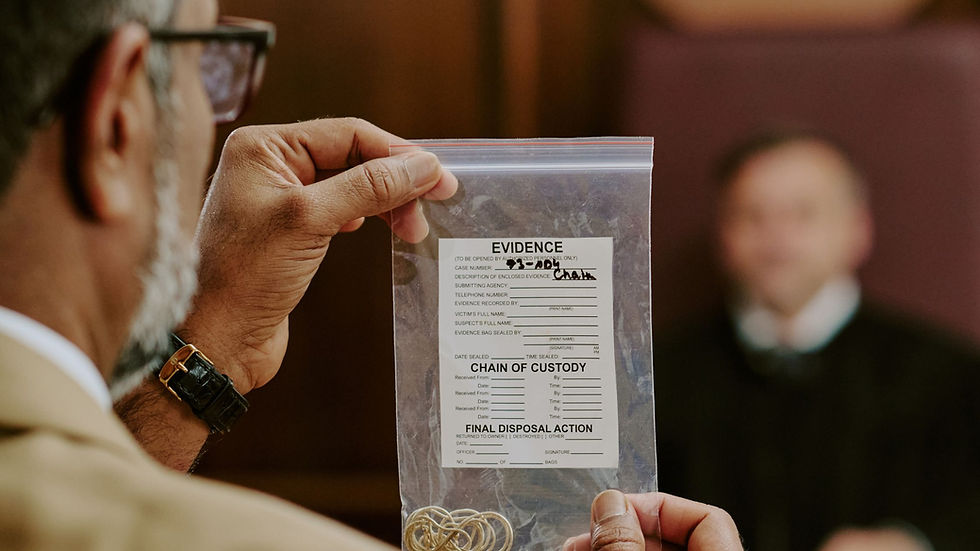
Evidence may be admitted in violation of the Michigan rules of evidence, or the trial court may improperly exclude relevant testimony. However, under MRE 103(a), an evidentiary error warrants reversal only if it affects a substantial right.
For example, improperly admitted testimony may be merely repeating evidence that was already established through other witnesses. And an appellate court may conclude the error was harmless because the jury heard the same information from admissible sources.
Similarly, excluding evidence that would have had little impact on the jury's decision generally will not justify a new trial.
Minor Jury Instruction Errors
Michigan trial courts must accurately instruct juries on the law that applies to the case. Nevertheless, appellate courts review jury instructions as a whole rather than focusing on isolated statements. An instruction may contain a technical mistake, but the overall charge may have fairly presented the issues and adequately protected the parties’ rights.
In such a scenario, the error may be considered harmless. This principle is reflected in MCR 2.512 for civil cases and MCR 2.513(N) for criminal jury trials.
Procedural Mistakes During Trial
Procedural missteps do not always affect the fairness of a trial. Examples of mistakes that don't have that effect include minor scheduling errors, clerical mistakes in court documents, technical defects in pleadings, and harmless violations of procedural rules. Michigan law instructs courts to disregard such errors.
Prosecutorial Misconduct That Did Not Influence the Verdict
Claims of prosecutorial misconduct are common in Michigan criminal appeals. However, even if a prosecutor makes an improper remark during opening statements or closing arguments, reversal is not automatic. Michigan appellate courts examine factors such as:
- Whether the defense objected
- Whether the trial judge gave a curative instruction
- The strength of the improperly admitted evidence
- Whether the improper comments likely influenced the jury
If the evidence of guilt is overwhelming and the improper comments were isolated, the court may conclude the misconduct constituted harmless error.
Errors that Do Not Usually Qualify as Harmless
Some mistakes are far more likely to require reversal because they undermine the fairness or integrity of the proceedings. And these fall under reversible errors. Examples of such mistakes include denial of the constitutional right to counsel, violations of the Confrontation Clause, and incorrect instructions on an essential element of the offense.
The same is true for admitting highly prejudicial evidence that likely had a strong influence on the verdict andvImproperly excluding critical defense evidence can also fall into this category. Reversible errors likely affect the outcome or deprive a party of a fair trial. They often involve prejudicial errors that affect substantial rights.
When appellate judges decide cases with these errors, they often vacate, reverse, or remand the case. While these are serious mistakes, these situations don't always lead to an automatic reversal.
This is because the applicable harmless-error standard depends on whether the error is constitutional or non-constitutional.
Constitutional Errors vs. Nonconstitutional Errors
One of the most important distinctions in Michigan appellate practice is whether the alleged error is constitutional or nonconstitutional. Although both types of errors may be reviewed under the harmless error Doctrine, they're evaluated under different standards. This is because constitutional rights receive greater protection.
Nonconstitutional Errors
Most appellate issues fall into the nonconstitutional errors category. Examples of such issues include routine evidentiary rulings under the Michigan rules of evidence, discovery disputes, and procedural errors.
Jury instructions issues that do not implicate constitutional rights and errors involving the application of court rules are also classified as nonconstitutional errors. For preserved nonconstitutional errors, the People v. Lukity case generally controls.
Here, the appellant bears the burden of demonstrating that the error was outcome-determinative.
Constitutional Errors
Constitutional errors involve violations of rights guaranteed by the United States Constitution or the Michigan Constitution of 1963. Errors in this category include denial of the right to counsel, violation of the Confrontation Clause, and improper restrictions on the right to present a defense.
These rights are fundamental to a fair trial. So, courts apply a more demanding harmless-error analysis. Some constitutional errors may still be deemed harmless if the reviewing court concludes beyond the applicable legal standard that the violation did not contribute to the verdict.
Beyond the applicable legal standard for constitutional errors typically means “beyond a reasonable doubt.” Other errors, which are often referred to as structural errors, require automatic reversal because they affect the framework within which the trial proceeds.
Distinguishing between constitutional, nonconstitutional, and structural errors is often one of the most important strategic decisions in an appeal.
How Michigan Courts Determine Whether an Error Was Harmless
Michigan appellate courts do not apply a one-size-fits-all analysis. Instead, they consider several factors before deciding whether an error warrants reversal. These factors include:
Was the Error Properly Preserved?
The first question is whether trial counsel objected at the appropriate time. Michigan law strongly encourages parties to preserve issues for appellate review.
And failure to object may result in the claim being reviewed only for plain error. This is a standard of review established in the People v. Carines (1999) case. Proper preservation often determines both the burden of proof and the level of scrutiny applied on appeal.
Was the Error Constitutional or Nonconstitutional?
As mentioned earlier, Michigan courts apply different harmless-error standards depending on the nature of the alleged violation. A routine evidentiary ruling under the Michigan rules of evidence is generally analyzed differently from a violation of constitutional rights.
Constitutional rights occupy a unique place in the legal system. Therefore, courts apply a more demanding harmless-error analysis.
The applicable standard of review can significantly affect how an appellate court evaluates an alleged trial error.
How Strong Was the Remaining Evidence?
Perhaps the most important consideration is the strength of the properly admitted evidence. The prosecution or the prevailing party in a civil case may have presented overwhelming evidence supporting the judgment. In such a case, an appellate court may conclude that the alleged error did not influence the outcome.
Conversely, a case may have been closely contested, and credibility may have been the central issue. In such a scenario, even a seemingly minor error may become outcome-determinative.
And this is one reason why experienced appellate attorneys like Mark Linton carefully analyze the entire trial record rather than focusing solely on isolated legal mistakes.
Was the Error Central to the Case?
Courts in Michigan also evaluate whether the alleged error involved a critical issue or merely a collateral matter. For example, improperly admitting cumulative evidence may have little effect if multiple witnesses established the same fact.
On the other hand, excluding the only witness who could support a party's primary defense may substantially affect the fairness of the proceedings. The more central the issue is to the jury's decision, the less likely the error will be considered harmless.
Is it More Probable Than Not That the Verdict Was Affected?
Ultimately, appellate courts in Michigan ask the same question asked in the People v. Lukity case. This question is, “Is it more probable than not that the error affected the outcome of the trial?” If the answer is no, the judgment will generally be affirmed despite the existence of the error.
If the answer is yes, there are three ways the case could go. The appellate court may reverse the judgment, order a new trial, or remand the case for further proceedings under MCR 7.216(A). The most persuasive appellate briefs in harmless-error cases explain more than just what the trial court got wrong.
They also explain why that error changed the outcome of the case. Establishing that connection often determines whether an appeal succeeds or fails.
Leading Michigan Cases That Define the Harmless Error Doctrine
The People v. Denson (2017) Case
In this case, the Michigan Supreme Court examined whether the erroneous admission of other-acts evidence required reversal of a criminal conviction. The Court concluded that the evidence had been admitted improperly under MRE 404(b).
However, it also emphasized that evidentiary errors do not automatically entitle a defendant to a new trial. Appellate courts must evaluate the entire record to determine whether the improperly admitted evidence affected the outcome of the proceedings.
The Court concluded that the improperly admitted evidence was not harmless because, when considered in light of the untainted evidence, it undermined the reliability of the verdict. The Court reversed the judgment of the Court of Appeals and remanded the case for a new trial.
The People v. Nelson (2025) Case
Here, the Michigan Supreme Court applied and reinforced the harmless-error principles. The Court reiterated that appellate courts should not evaluate alleged errors in isolation. Instead, they must consider the context of the entire trial record.
The decision reinforced that harmless-error analysis requires more than a practical assessment of whether the trial court technically violated a rule of evidence or procedure. It is also necessary to determine how the alleged mistake may have influenced the jury’s verdict.
In this case, the exclusion of critical defense testimony combined with instructional ambiguity was deemed “more probable than not” outcome-determinative. This was in accordance with the People v. Lukity case and MCL 769.26. However, some related information emerged later in a limited way.
The People v. Snyder (2000) Case
Here, the Michigan Supreme Court considered whether limitations placed on impeachment evidence required reversal. The Court acknowledged that trial judges occasionally make incorrect evidentiary rulings. However, the existence of an evidentiary error does not automatically entitle a defendant to a new trial.
Instead, the reviewing court examined whether excluding the impeachment evidence likely influenced the jury's decision. It did so after considering all of the properly admitted evidence presented at trial.
Frequently Asked Questions About the Harmless Error Rule
Can the Harmless-error principle apply even if the trial judge admits making a mistake?
Yes. A trial judge's acknowledgement that a legal error occurred does not automatically require a new trial. On appeal, the reviewing court independently determines whether the mistake affected the outcome or the parties' substantial rights. If the error is deemed harmless, the judgment may still be affirmed.
Does the Harmless-error doctrine apply to plea agreements?
Generally, no. The Harmless-error doctrine most commonly applies to errors that occur during trials. Appeals involving guilty or no-contest pleas often raise different legal issues. These issues include whether the plea was entered knowingly and voluntarily. They also include whether the defendant received ineffective assistance of counsel during the plea process.
Can multiple harmless errors together justify reversing a case?
Yes. A single error may be harmless on its own. But several harmless errors may collectively deprive a party of a fair trial. This is known as the cumulative error doctrine. Michigan appellate courts may reverse a judgment if the combined effect of multiple errors undermines the reliability of the proceedings.
Does the Harmless-error doctrine apply in both jury trials and bench trials?
Yes. The doctrine applies regardless of whether the case was decided by a jury or by a judge sitting without a jury. However, appellate courts may evaluate prejudice differently. This is because judges are presumed to understand and correctly apply the law when acting as fact-finders.
Can newly discovered evidence overcome a harmless error finding?
Not by itself. Newly discovered evidence is generally evaluated under a different legal framework than the harmless-error review. However, the new evidence may demonstrate that an error had a greater impact than originally understood. And when this happens, the evidence may become relevant in post-conviction proceedings or a motion for a new trial.
Does every evidentiary error become a harmless error issue on appeal?
Not necessarily. Before an appellate court considers whether an evidentiary error was harmless, it must first determine whether the trial court actually committed an error. If the court concludes the evidence was properly admitted or excluded, the harmless-error analysis is unnecessary.
How long does it take for the Michigan Court of Appeals to decide if a trial court error was harmless?
There is no fixed timeline. The Court evaluates harmless-error arguments as part of its review of the entire appeal. The length of the time depends on various factors. These include the complexity of the case, the size of the record, the legal issues presented, and the court's docket.
Can the Michigan Supreme Court review a harmless error decision made by the Court of Appeals?
Yes. A party may file an application for leave to appeal to the Michigan Supreme Court after the Court of Appeals issues its decision. However, the Supreme Court has discretionary review and accepts only a small percentage of the cases. And these are typically those involving significant legal questions or issues of statewide importance.
How Mark Linton Builds a Strong Harmless Error Argument
Every harmless error case tells two stories. The prosecution argues the mistake changed nothing. And the appellant must show it changed everything. Too often, appeals fail because they stop at the first story. They identify what the trial court did wrong, but never fully explain why it changed the outcome.
Mark Linton takes a different approach. He builds arguments that connect the error to the verdict. This shows why a mistake that may look small on paper had a major impact inside the courtroom. The most important question in a harmless-error appeal is rarely, “Did an error occur?” It is, "What happened because of it?"
Mark Linton’s appellate court experience informs how he evaluates the trial record, identifies potentially reversible errors, and connects those errors to the outcome.
Contact Michigan appeals lawyer Mark Linton today to discuss what went wrong at trial, why it mattered, and whether it may provide grounds for appeal.


Comments